
Notes from the DNS layer.
Practical explanations, worked examples and checks you can repeat on your own domain.
38 guides
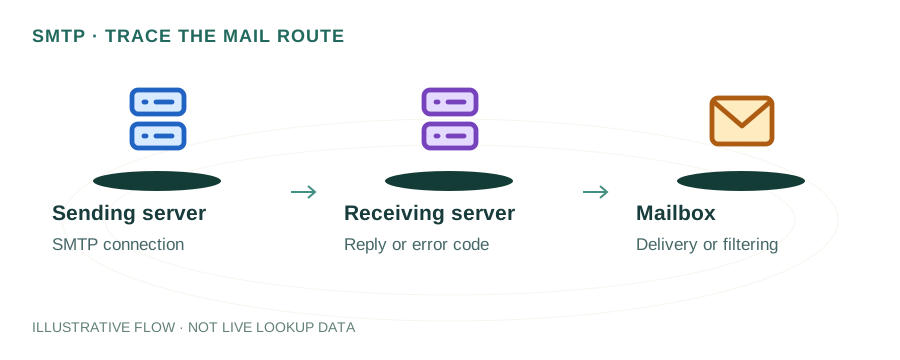
Why Your Emails Go to Spam (And How to Fix It)
Investigate authentication, sender reputation and recipient filtering when legitimate email lands in spam.
Read the guide ↗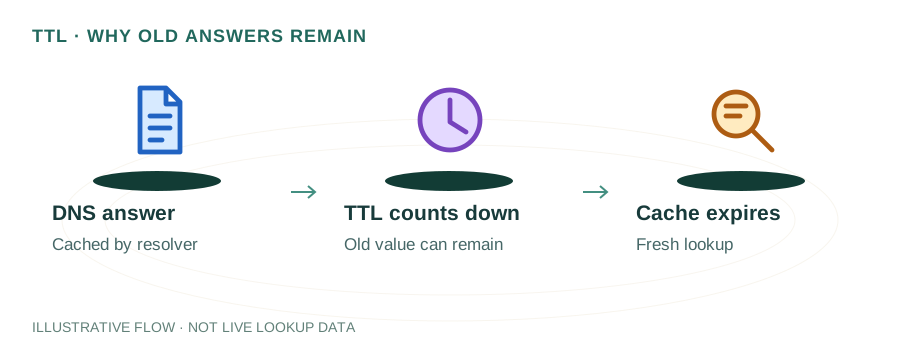
DNS TTL Explained: How to Choose the Right Value
Read DNS TTL values, understand resolver caching and plan address changes around the lifetime of existing cached answers.
Read the guide ↗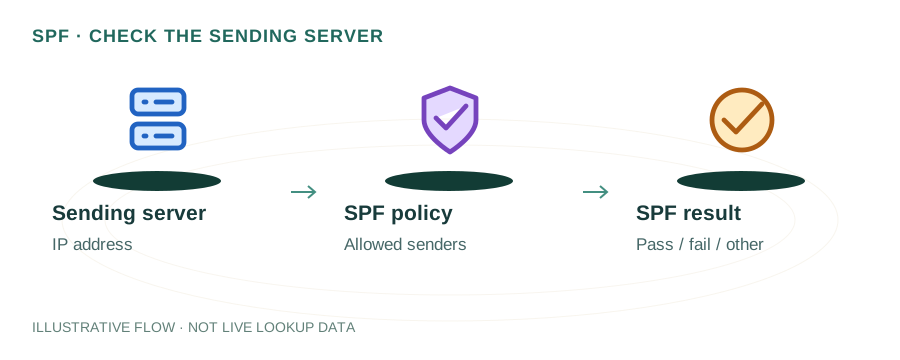
SPF Too Many DNS Lookups: How to Fix PermError
Trace SPF include chains, understand the DNS lookup limit and find unnecessary mechanisms before changing your sender policy.
Read the guide ↗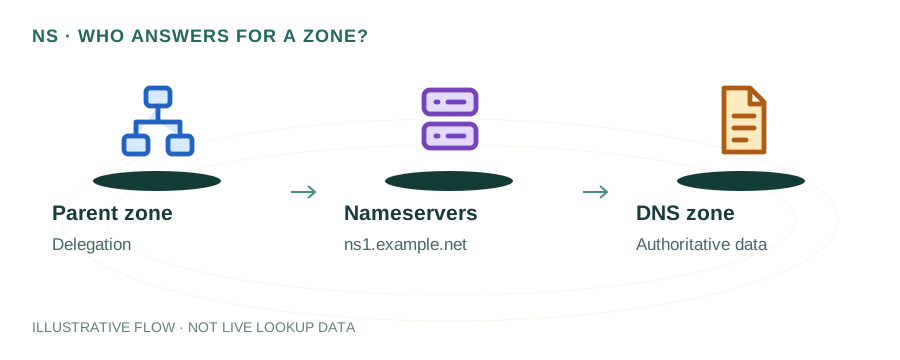
How to Set Up Cloudflare DNS (Step by Step Guide)
Plan a move to Cloudflare DNS: inventory records, verify imported values, update delegation and test website and mail service.
Read the guide ↗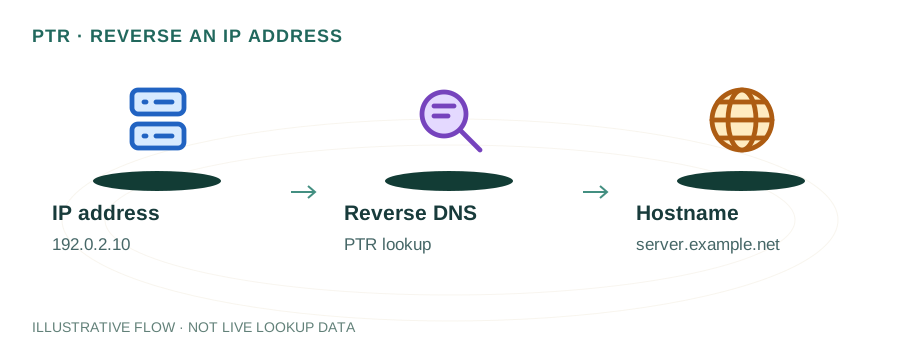
What is Reverse DNS (rDNS)? PTR Records Explained
Understand PTR records and forward-confirmed reverse DNS, and learn why mail servers may check a sending IP hostname.
Read the guide ↗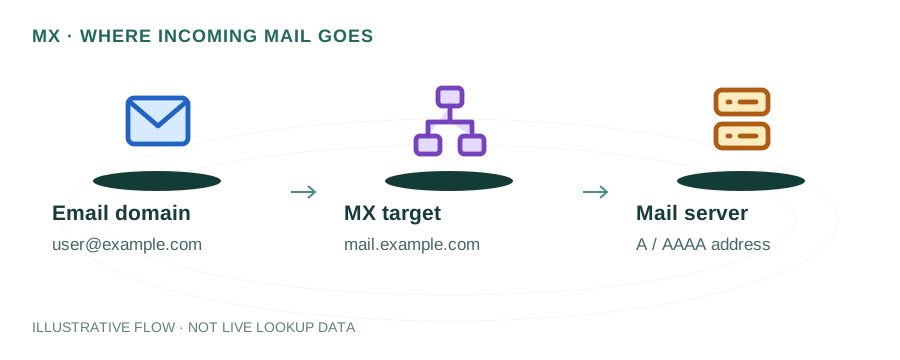
MX Records Explained: How Email Routing Works
Read MX priorities, resolve the receiving mail hostname and distinguish DNS routing from SMTP or mailbox delivery failures.
Read the guide ↗How to Change Nameservers Without Downtime
Prepare a replacement DNS zone, verify authoritative answers and change registrar delegation while preserving mail records.
Read the guide ↗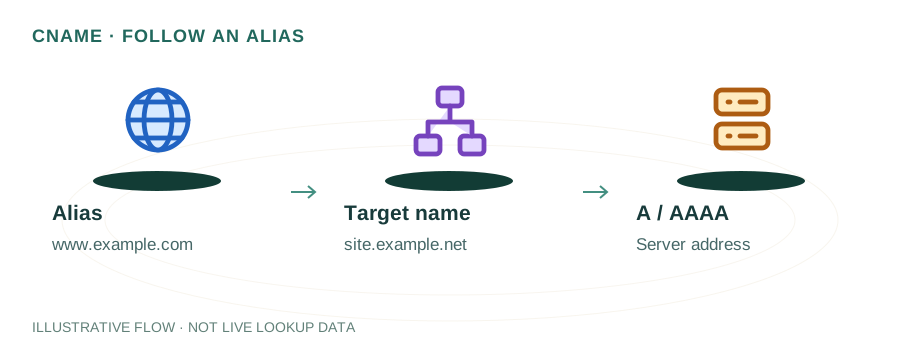
CNAME vs A Record: Differences & When to Use Each
Compare an A address record with a CNAME hostname alias, including apex restrictions and common website configuration mistakes.
Read the guide ↗How to Check DNS Propagation: Tools & Commands
Compare authoritative and recursive DNS answers, inspect remaining TTL and investigate differences without assuming a fixed wait.
Read the guide ↗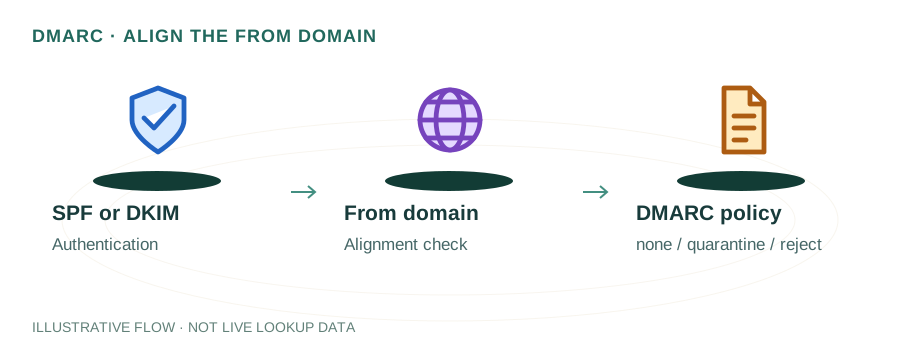
How to Read DMARC Reports: Analysis Guide
Read DMARC aggregate reports to identify sending sources, authentication results and alignment failures before tightening policy.
Read the guide ↗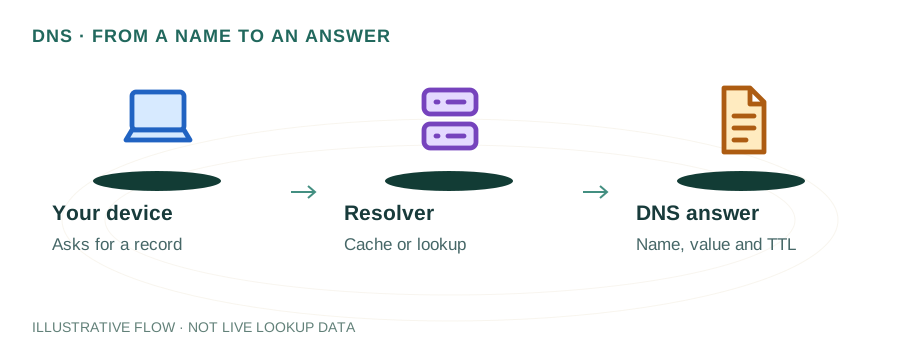
How DNS Works: A Step-by-Step Guide to Domain Name Resolution
Follow a DNS query from the browser and resolver through delegation to an authoritative answer, including where caching helps.
Read the guide ↗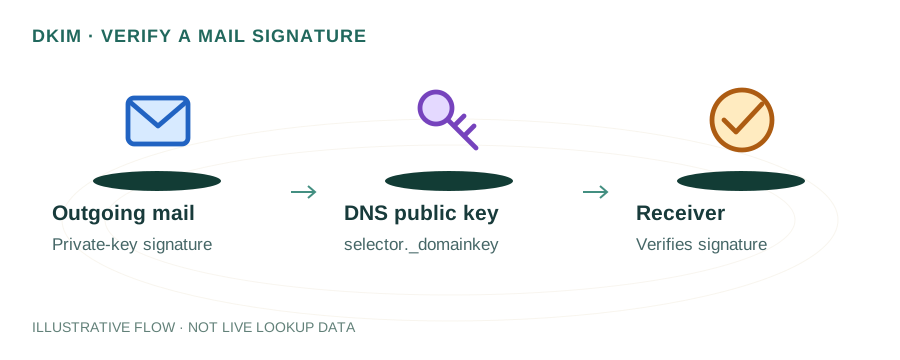
How to Set Up DKIM: A Complete Step-by-Step Guide
Find your email provider’s DKIM selector, publish its public key and verify the signature on a delivered test message.
Read the guide ↗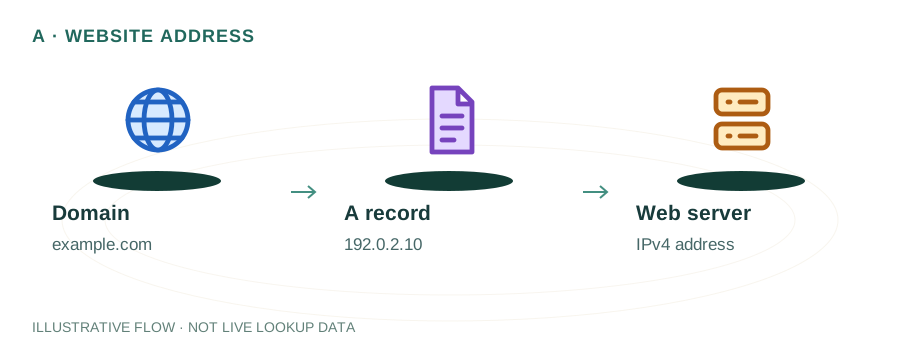
DNS Load Balancing with Round-Robin: How It Works and When to Use It
Learn how multiple address records distribute DNS answers and why round-robin DNS alone does not provide health checks.
Read the guide ↗What is a Wildcard DNS Record? How It Works and When to Use It
Understand when wildcard DNS answers a name, how existing records affect matching and why TLS configuration is separate.
Read the guide ↗How to Set Up an SPF Record: Complete Guide with Examples
Build a single SPF TXT policy from your actual sending services and verify syntax and lookup limits before enforcing it.
Read the guide ↗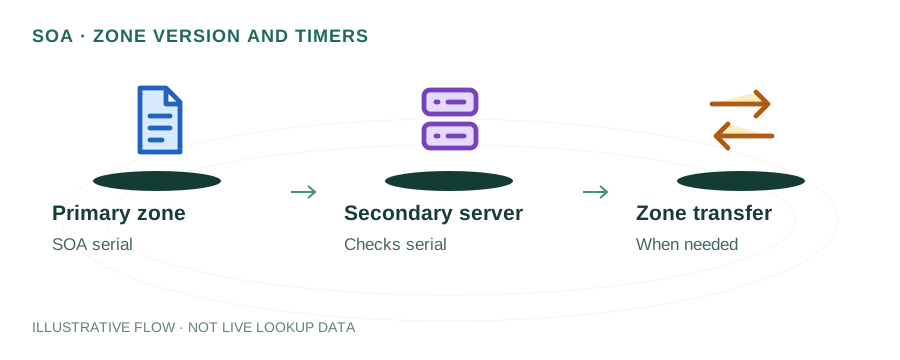
DNS Zone File Explained: Structure, Syntax, and Examples
Read zone-file names, TTL, class and record data, and understand origin, serial numbers and absolute hostname notation.
Read the guide ↗Email Header Analysis: How to Read and Debug Email Headers
Trace Received headers and authentication results to investigate email routing, delays and suspicious sender claims.
Read the guide ↗What is DNS over HTTPS (DoH)? How It Works and Why It Matters
Understand what DNS over HTTPS encrypts, who still sees a query and how browser DNS settings can differ from system settings.
Read the guide ↗Email Bounce Types Explained: Hard vs Soft Bounces and How to Fix Them
Distinguish temporary and permanent email delivery failures using SMTP reply codes and the accompanying diagnostic message.
Read the guide ↗How to Set Up a PTR Record: Reverse DNS Configuration Guide
Request reverse DNS from your IP provider, configure a mail-server hostname and compare its PTR with forward address records.
Read the guide ↗DNS Failover Setup: How to Keep Your Site Online When Servers Go Down
Understand health checks, DNS answer changes and cache delays when designing failover between hosting endpoints.
Read the guide ↗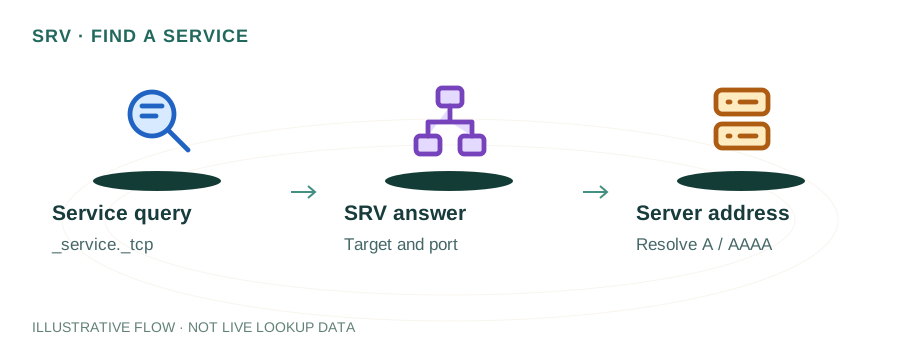
What is an SRV Record? DNS Service Records Explained with Examples
Read SRV priority, weight, port and target fields and verify whether the client application supports service discovery.
Read the guide ↗Email Warm-Up Best Practices: How to Build Sender Reputation from Scratch
Plan permission-based sending, monitor bounces and complaints, and adjust volume using actual recipient feedback.
Read the guide ↗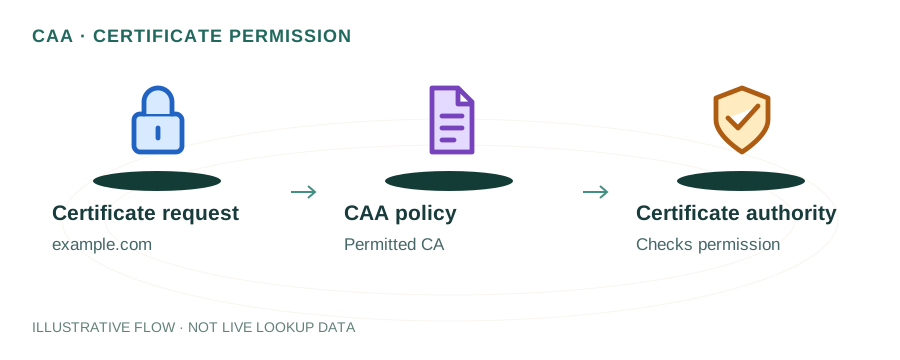
CAA Record Explained: DNS Certificate Authority Authorization
Read CAA issue and issuewild values, check certificate-authority permissions and diagnose issuance policy restrictions.
Read the guide ↗How to Debug DNS Resolution: Commands & Troubleshooting
Investigate NXDOMAIN, SERVFAIL and timeouts by comparing delegation, authoritative answers and recursive resolver behavior.
Read the guide ↗Email Authentication Alignment Explained: SPF, DKIM & DMARC
Compare the visible From domain with SPF and DKIM identities to understand why an authenticated message can still fail DMARC.
Read the guide ↗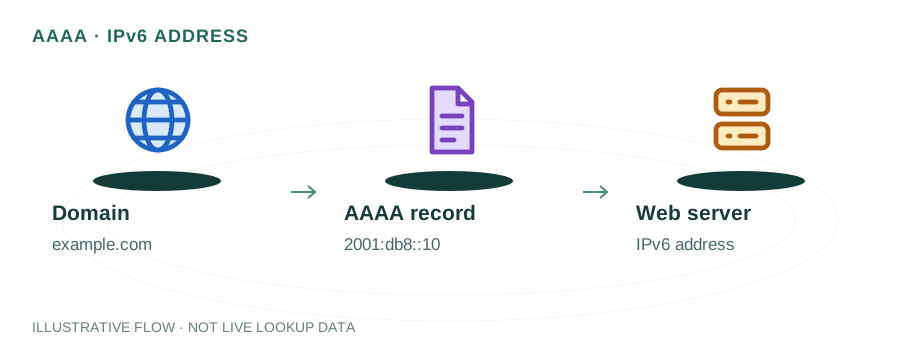
AAAA Record Explained: IPv6 DNS Records
Publish and verify IPv6 address records, and check connectivity before directing website visitors to an IPv6 endpoint.
Read the guide ↗How to Set Up DMARC from Scratch: Complete Guide
Start DMARC monitoring, examine aligned sending sources and plan policy enforcement after verifying legitimate mail streams.
Read the guide ↗SPF vs DKIM vs DMARC: Email Authentication Comparison
Compare SPF sender authorization, DKIM signatures and DMARC alignment, with examples of what each check does and does not prove.
Read the guide ↗NS Record Explained: How DNS Nameserver Records Work
Understand NS delegation and authoritative nameservers, including how parent and child-zone records can become inconsistent.
Read the guide ↗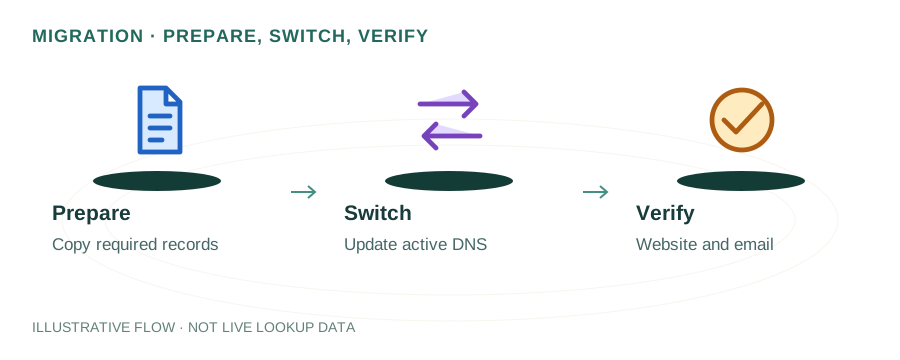
How to Migrate Email to Google Workspace: DNS & MX Setup
Prepare mailboxes, preserve existing mail data and verify Google Workspace routing and authentication during an email migration.
Read the guide ↗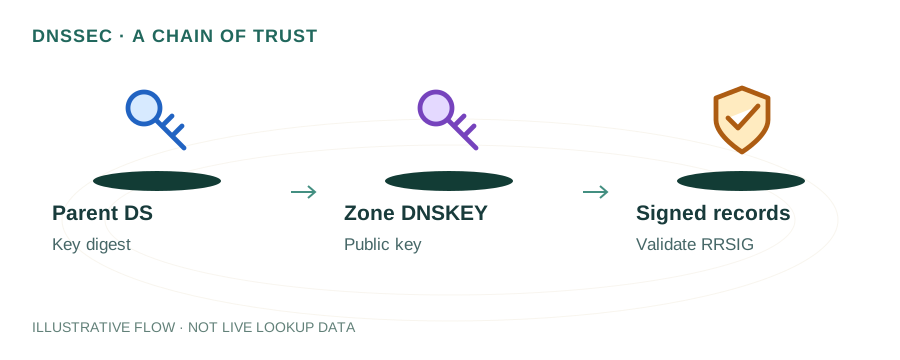
DNS Security Best Practices: Protect Your Domain
Review registrar access, DNS change controls and DNSSEC validation, and distinguish DNS integrity from encrypted transport.
Read the guide ↗What is My DNS Server? How to Find and Change It
Find the DNS resolver configured on your device and understand how routers, VPNs and browser secure-DNS settings affect queries.
Read the guide ↗How to Flush DNS Cache on Windows, Mac, Linux & Chrome
Clear local DNS caches on common operating systems and understand why this does not clear caches at public resolvers.
Read the guide ↗nslookup Command Examples: The Complete DNS Query Guide
Use nslookup to query address, mail and nameserver records and compare answers from a chosen DNS server.
Read the guide ↗dig Command Tutorial: DNS Lookup Examples for Beginners & Pros
Use dig to select record types and resolvers, read response status and TTL, and investigate DNS delegation.
Read the guide ↗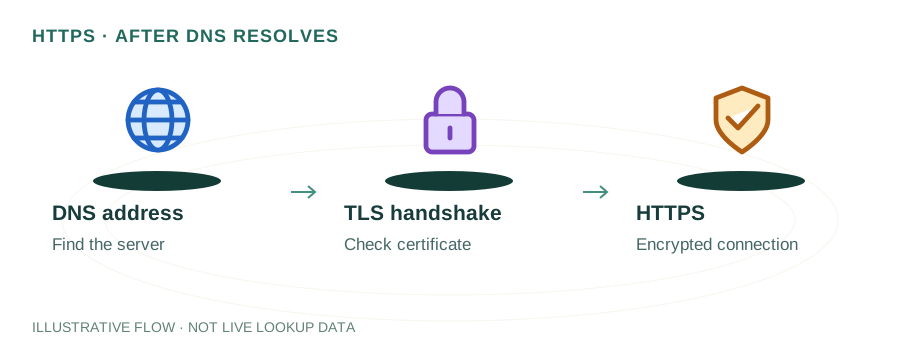
How to Check SSL Certificate: Browser, Command Line & Online Tools
Inspect a website certificate’s hostname coverage, expiry and chain, and separate TLS problems from DNS lookup failures.
Read the guide ↗SMTP Error Codes List: Complete Guide to Email Server Response Codes
Interpret SMTP 4xx and 5xx replies alongside enhanced status codes and server messages to choose a useful next check.
Read the guide ↗